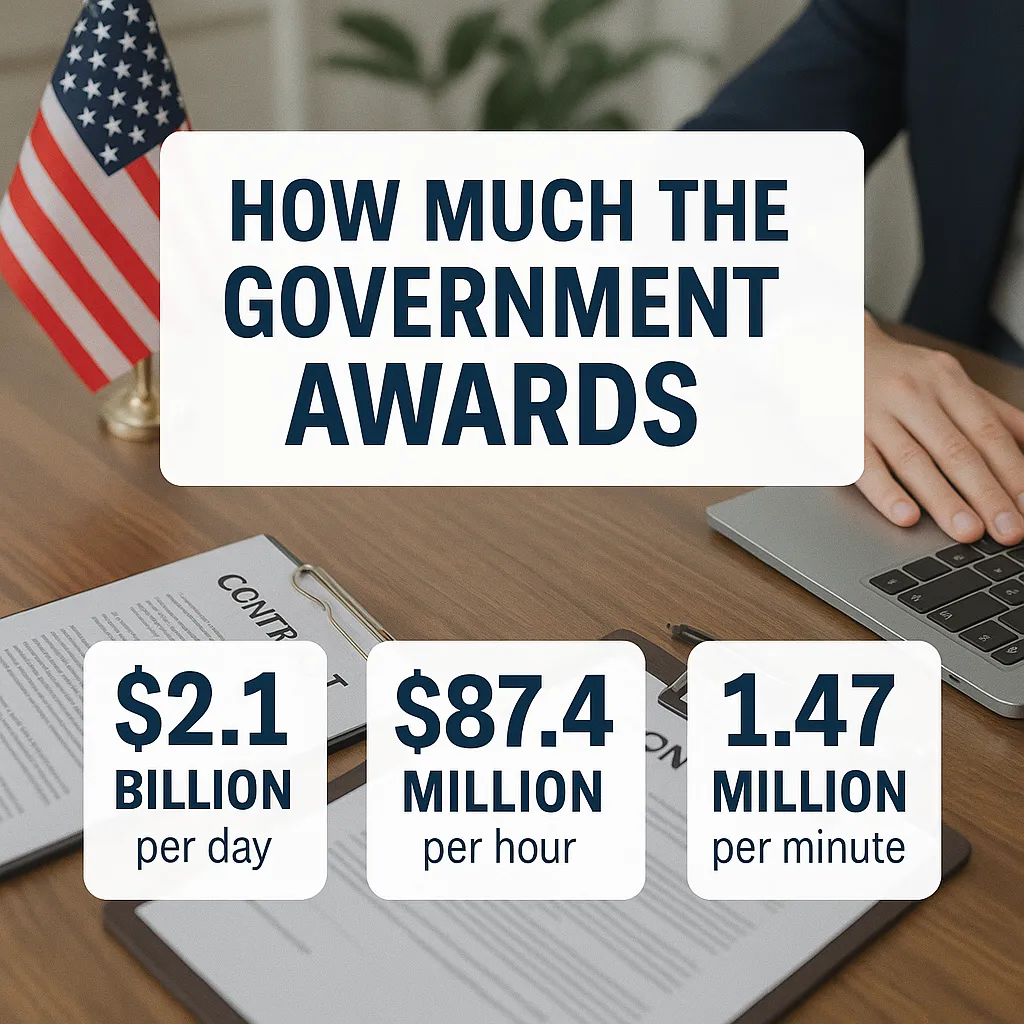
The Government Awards an average of
$24,500 per SECOND to businesses everyday. By the Time You Read this they have awarded over $100,000 in contracts.
First Name
*
Last Name
*
Email
*
Click Here To Sign Up For The Challenge
Privacy Policy
|
Terms of Service
🔑 Why Small Business Owners Should Get Into Government Contracting as a Manager
1. Government Agencies Need Simplicity
Agencies don’t want to manage 10–15 different subcontractors.
As the Manager, you simplify the process by being their single point of contact.
You handle the paperwork, compliance, and oversight — they just get results.
2. You Add Value Without Owning Every Resource
You don’t need to own all the trucks, machines, or teams.
Instead, you coordinate specialists who already have the equipment and expertise.
This makes you the Project Manager who ensures quality, deadlines, and compliance are met.
3. You Control the Relationship
The government pays
you
, not the subcontractor.
That means you control pricing, profit margins, and the flow of work.
The subcontractors work under your leadership — you’re managing, not “in the middle.”
4. Leverage Without Overhead
You can scale faster because you don’t need to buy assets or hire full-time staff upfront.
By acting as a Contract Manager, you leverage other businesses’ capabilities while focusing on growth.
5. It’s Compliant When Done Right
FAR clauses allow subcontracting if you still provide value-add (management, compliance, reporting, and quality control).
You’re not just “passing through” costs — you’re actively managing the contract.
That distinction keeps you both compliant
and profitable.
6. Government Prefers Managers, Not Operators
Agencies often don’t care
who
mows the lawn, installs the AC, or delivers the equipment — they just care that it gets done right.
They prefer dealing with a reliable Manager who guarantees results, versus tracking multiple small vendors.
7. You Build a Scalable Business Model
Instead of being stuck doing the work yourself, you step into a leadership role.
The business runs because you’re coordinating systems, people, and contracts — not because you’re out in the field.
This turns a small business into a true enterprise.